I'm a nanny for a family in Greenwich. The stuff rich people spend money on would shock you. I've been with this family for three years. The mom used to run a design firm. The dad does something in private equity I still don't fully understand. Two kids. A house that looks like it was built for a magazine cover. I'm talking a kitchen with a marble island bigger than my entire apartment. A living room with furniture you're afraid to sit on. Fresh flowers in every room, delivered twice a week from a florist in the city. I watched them spend $1,400 on flowers that died in six days. The housekeeper threw them out on a Tuesday and new ones arrived on Wednesday like nothing happened. They throw dinners where the table is set for twelve, with place cards, and someone drives out just to do the flowers for that one night. They fly private to Aspen. They have a car they don't drive. Their kids' playroom has a $3,000 rug that gets juice spilled on it daily and nobody blinks. And most of it, I don't get it. I really don't. It feels like spending for the sake of spending. Like money is just background noise in their life and they don't even hear it anymore. But there's one thing I noticed in this house that actually made sense to me. Their beds. I know. I know how that sounds. But let me explain. My first week on the job, the mom asked me to make up the guest room before her sister came in. I stripped it, put the fitted sheet on, and pressed my hand down flat to smooth out a wrinkle near the corner. And my hand just kept going. Not in a soft way. Not like a bed that's worn out and giving up under you. It went down about an inch into something dense, and then it stopped, and then it came back. Slowly. Like the bed was pushing back at me. I stood there in someone else's guest room pressing my hand into a mattress over and over like a crazy person. Because it did not feel like any bed I had ever touched. I lifted the corner of the sheet to see what was under it. There was a thick white quilted layer over the mattress, stitched all over in a diamond pattern. Puffy in every square. I put the sheet back and went downstairs and honestly forgot about it for a while. Then came the night in November. They had one of their dinners. Twelve people, candles down the middle of the table, the whole thing. I was upstairs with the kids until they fell asleep, and by the time the last car pulled out it was almost one in the morning and it had been raining sideways for three hours. Half the roads between there and my place in Bridgeport were under water. The mom looked at me in the hallway and said, "Just take the guest room. Don't be ridiculous." So I did. And I want to be clear about something. I sleep badly. I have for years. I'm a side sleeper on a firm mattress I bought on sale in 2019, and I wake up two or three times a night with my shoulder aching and my arm dead underneath me. I flip. I stack pillows. I have a whole system. That night I got in that bed at almost two in the morning and the next thing I knew it was seven. I laid there for a second trying to figure out what was different. My shoulder didn't hurt. My hip didn't hurt. I hadn't rolled over. I could actually feel where the bed had let my shoulder sink in instead of shoving it back up at me all night. I got up, made the bed, went downstairs, and made two kids their breakfast, and I could not stop thinking about it. I drove home that evening and got into my own bed and it felt like lying on a countertop. For the next two weeks I noticed it constantly. Every time I walked past a bedroom. Every time I changed sheets. That thick quilted white layer in every single room in that house, including the kids' rooms, and then me going home to a mattress that had me awake at four in the morning shaking my arm out. It started to bother me. Not in a jealous way. In a "why does this exist and I didn't know about it" way. So one afternoon the mom was in the kitchen cutting up apples for the kids and I just asked. Casually. Like it was nothing. "Random question. What is on the guest bed? The white quilted thing." She didn't even look up. "Oh, that's the topper. Those mattresses are nothing special, honestly. I think they came with the house. It's what goes on top that does it." "That's it? That's the whole thing?" "That's the whole thing. It's what makes a hotel bed feel like a hotel bed. People come back from the Four Seasons and go shopping for a mattress. It's almost never the mattress." She slid the apples onto a plate. "It's West Month. I put them on every bed in this house." I told her I'd actually tried a topper once. Bought one at a big box store for maybe forty dollars. It felt great for about six weeks and then it was flat, with lumps at the bottom and nothing in the middle. She nodded like she'd heard it a hundred times. "Right, because there's nothing holding the fill in place. It just slides around while you sleep and collects at the edges. These are 1000 GSM, so there's a lot of fill in there to begin with, and then it's diamond stitched. The fill gets sewn into diamond shaped pockets that are closed on all four sides. It physically can't migrate. That's the whole reason it stays thick." "Everyone knows about this?" I asked. She looked at me. Smiled. "Well, a certain kind of person does, I guess." A certain kind of person. That sentence sat in my stomach for the rest of the day. I went home that night and sat on the edge of my bed with the website open on my phone. And I almost didn't order it. Because who spends that kind of money on something that goes under the sheet? Something nobody will ever see? Me? A nanny from Bridgeport with a used Honda and a one bedroom? I buy my bedding in a set from wherever it's cheapest. That's who I am. But I kept thinking about waking up at seven with a shoulder that didn't hurt. I ordered it. Put it on my credit card and immediately felt guilty about it. It came four days later and the box was heavier than I expected. I dragged it up the stairs, cut it open on the floor, and unfolded it across my bed. Same thing. That thick white quilted layer, diamonds all the way across, every one of them full. I put my sheet over it and pressed my hand down in the middle and my hand sank about an inch and stopped and came back up. I sat on the floor of my own bedroom and laughed. That night I got in and the bed did not feel like my bed. My shoulder went into it instead of onto it. I remember thinking, okay, but this is probably just because it's new. I woke up at six forty. Once. On my side. I gave it a week before I said anything to anyone, because I genuinely thought it would wear off. It didn't. By day five I was going to bed earlier on purpose. Like a child. Then I texted my sister. "I think I fixed my back with a blanket." She called me. "A what?" "It goes on top of the mattress. Under the sheet." "Does it actually work or are you just excited because you spent money." "I slept through the night five nights in a row." Silence. Then, "Send me the link." She ordered one that night. Nine days later she called me back. "I hate you. Ryan won't sleep in the guest room anymore, he says it's better in there than our room. We had to order a second one." My mom has one now. My best friend has one. My sister's neighbor has one because she stayed over and came downstairs the next morning and asked what was on the bed before she asked for coffee. And every single one of them said the same thing. "Why did nobody tell me about this sooner?" Here's what I think about now. I spend ten hours a day in a house where everything is built to feel good. And I used to go home and just accept that my life doesn't feel like that. But some of it can. I can't afford the marble island. I can't afford the flowers that die in six days or the dinners with place cards or the plane to Aspen. I can afford the bed. And the bed is the one you're actually in. Eight hours a night, every night, more than any chair or any rug or any car in that entire house. The family I work for doesn't sleep like that because they're rich. They sleep like that because somebody told them once, years ago, and they never went back. Nobody tells the rest of us. You don't need a house in Greenwich. You don't need a husband in private equity. You don't need a new mattress. You just need what they put on top of theirs. It's 47% off right now with free shipping. And it comes with a 30 Day Money Back Guarantee. But after the first week you won't be sending it back. You'll be texting your sister the link. Trust me. I know, because that's exactly what I did. ... more
I have met the man in this story a hundred times, under a hundred names. I invented every one of him. Today, call him Ray. I met this version of him on a Saturday, in the parking lot of a hardware store, because his cart and mine wanted the same stretch of curb. The cart tells you most of it. Two bags of mulch. A gallon of paint with a stir stick taped to the lid. A new washer for a faucet that has been announcing itself for a month. A coil of rope whose purpose I never learned. While we waited on the same slow loading zone, he ran through his day the way people read a grocery list — no drama, no sighing, just inventory. The mulch was for his mother-in-law's beds across town. The paint was for a hallway. There was a birthday cake to pick up on the far side of town, a nephew's game to sit through in a folding chair he keeps in the trunk for exactly this, and a neighbor's cat with opinions about being fed on schedule. Then he checked his watch, nodded at the list the way a foreman nods at a site, and said the thing I have heard from a hundred Rays in a hundred parking lots: "Better get moving." No complaint in it. No speech. Just a man taking accurate measure of a large day and getting on with it. I have thought about that nod more than I expected to. Because here is what the encounter was actually about, and it was not Ray. It was the size of the day itself. Somewhere in the last stretch of years, the ordinary day quietly became enormous. The list on any given fridge is spoken for before it is written. The calendar fills itself. Nobody signed up for this exactly — the errands just kept accepting the invitation, and the day kept setting more chairs at its own table. And the day does not ask permission. It shows up daily. That is its whole personality. It was there today, it will be there tomorrow, and it has never once called ahead to check whether the timing works. You cannot negotiate with a thing that reliable. You can only decide what else in the week gets to be as reliable as it is. Which is the only way a supplement earns a place in a week like Ray's: by being as easy to keep as the day is hard to cancel. PrimeCell H2 was built to be kept. It is an effervescent tablet. The whole routine: one tablet, one glass of water, once a day. Drop it into 12–16 oz of cool water — not hot — and it dissolves fully in 60–90 seconds; drink within 10 minutes. The box holds 30 tablets, a 30-day supply, and the label's own words are short: no artificial additives. A routine that small has no schedule to protect, no steps to skip, and no gear to wash. It fits inside a Ray-sized day without asking the day to move anything. PrimeCell H2 supports steady, sustained daily energy.* And now the part we refuse to do, because the refusal belongs in writing. We will not tell you what taking PrimeCell H2 feels like, and we will not tell you when to expect anything, and we will not stand in a parking lot of our own making and promise that a tablet resizes anyone's Saturday. The day is the day. Our job is one small, keepable routine — and the discipline to stop there. A word on where it sits. This goes alongside the rest of a routine — the meals, the walks, the sleep — not in place of any of it. And the standing advice holds: talk to your doctor or pharmacist before adding any supplement, especially if you take any medication. As for Ray — the loading zone cleared, the trunk closed on the mulch and the folding chair, and he was gone toward the far side of town and the cake. The day will be back tomorrow. That part is settled. The only open question is what else shows up that reliably. The keys will. The mail will. A routine can too, if it is small enough — one glass, one tablet, one motion that shows up as reliably as the day does. So look at the week taped to your own fridge — the one that is already spoken for. Do not add anything to it that needs managing. If you bring PrimeCell H2 into a week like that, bring it in on the day's own terms: something that shows up daily, takes one small corner of the kitchen, and never once asks the rest of the list to wait. Ray is a composite — I told you that in the first sentence. The day, you already know, is real. — Amala Health P.S. The guarantee, plainly: If you're not satisfied with PrimeCell H2, return your order within 90 days of delivery for a full refund. P.P.S. The label facts, for the thorough: 30 tablets per box, a 30-day supply. No added sugar. Non-GMO and vegan-friendly. Third-party tested for purity, and tested for heavy metals and contaminants. Manufactured in the USA from globally sourced ingredients. https://track.getamalahealth.com/5548c06d-d9c3-4785-b466-fec64a6fdb28 Individual experiences vary. These statements have not been evaluated by the Food and Drug Administration. This product is not intended to diagnose, treat, cure, or prevent any disease. ... more
📢🐶 What's in your dog's food REALLY matters—here's why. Hey guys, Katherine Heigl here, Our foundation has helped over 20,000 dogs by giving them shelter and medical care here at Badlands Ranch, before placing them in loving forever homes. 🐾 And after everything I’ve seen, I can tell you this with TOTAL confidence: 👉 Air-dried food is the best way to give your dog the nutrients they need to thrive. Store-bought food is cooked at extremely high temps, which destroys nutrients and creates harmful byproducts. Not to mention the nightmarish ingredient lists: fillers, artificial preservatives, and carcass trimmings? No, thanks 😣 NO dog deserves to eat like this. That’s why we created Superfood Complete—an air-dried blend made with premium ingredients, cooked low and slow to protect the nutrients. It gives your dog everything they could possibly need in their diet, and most importantly, helps them stay healthier and happier 🌿 And the best part? My dogs absolutely DEVOUR it—all six of them. If you're hoping to feed your dog like you would your family… this is where I’d start. 💛lnk.to/BDRSurveyHP ... more
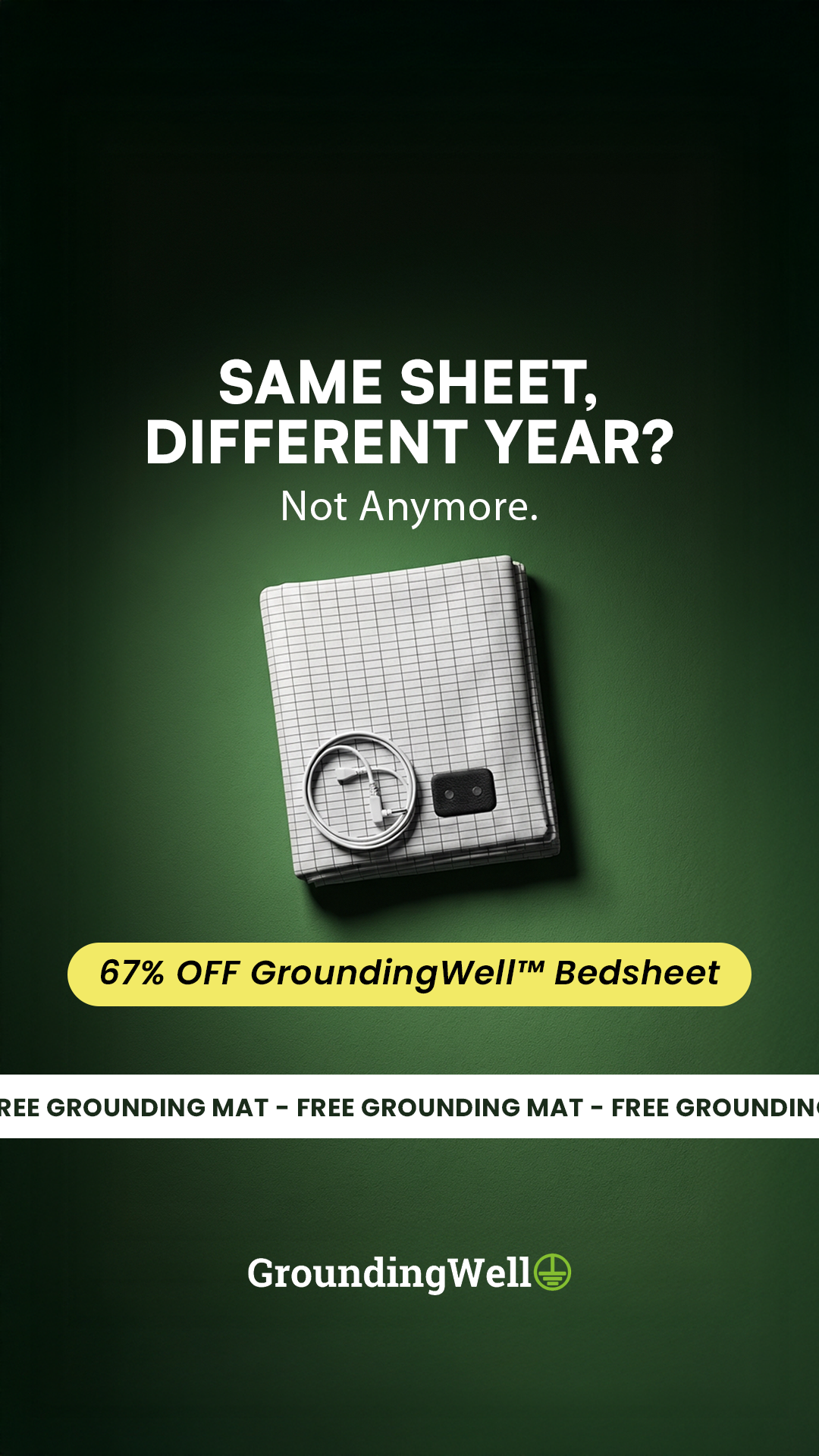
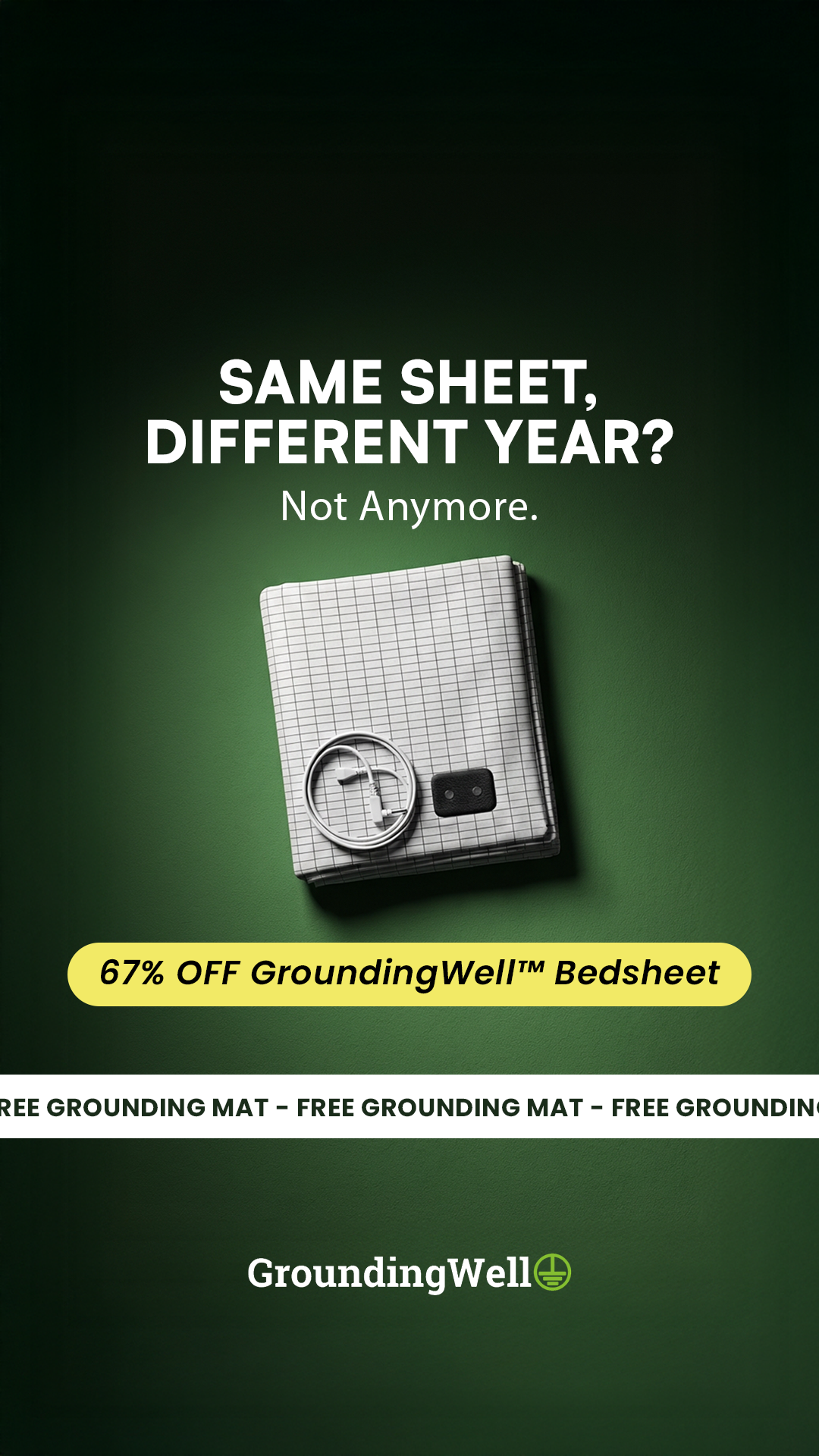
Heal your body with Nature's electrons. Try grounding today 👇 - Helps you get deeper and more restful sleep - Improves energy levels and mood - Helps with Inflammation & chronic pain Get yours at 👉 https://journal.groundingwell.com/pages/bed-sheet ... more
Oak is almost here, our chocolate and oatmeal herringbone weave. Dropping 9.9 at 1pm ET. ... more
Pet-Friendly Riding Is Coming Soon. 🐾🚲 Puckipuppy started with a beloved companion and a simple belief: more of life should be shared together. More rides. More little stops. More time with your best friend. Who would you bring along for the ride? #Puckipuppy #PetFriendlyRide #RideWithPets #DogLife #DogLovers #PetLovers #PetFriendly #EbikeLife #ElectricBike #OutdoorRide #AdventureWithDogs #MadeForMiles #MeantForMoments ... more
Leather Rifle Scabbard for Lever Action Carbine Horseback or ATV Hunting Fits Winchester Marlin Henry USA Made ... more
He's not fighting the bridle. He's fighting tension in his TMJ. HaloHead wraps red and near infrared light around the poll, jaw, and full neck to ease it in 10 to 20 minutes. 30 day money back guarantee. ... more
Here is the deal in plain terms. The 3-pack is $24.99 per jar instead of $34.99 and covers ninety nights of the two-minute bedtime routine. The 90-day money-back guarantee runs the same ninety nights. If it works, you saved $30. If it doesn't, every dollar comes back and you are out two minutes a night. 12,000+ five-star reviews and counting. ... more
"If you're looking for a treat that will keep even the BIGGEST chewer happily gnawing for weeks on end, then look no further than our all-natural, hickory cold-smoked, beef marrow bones. American-made and sourced from local USDA-inspected PA farms, we make sure these meats meet the highest standards before being packed up and shipped straight to your doorstep. There's nothing more satisfying than unwrapping its paper package, inhaling the BBQ scent and giving your dog the perfect single-ingredient, NEVER SPLINTER chew." ... more
If brushing was ever going to work for your dog, it would have worked by now. The smell isn't food, and it isn't age. It's bacteria at the gumline — and every chew, brush and additive you've tried works on the wrong layer. DE-01™ Dental Dogbiotic is a postbiotic that goes after the source: clinically shown to lower bad-breath compounds 27% more than placebo in 14 days. One scoop on his food. No brushing, no wrestling, no anesthesia. 30,000+ dogs, 4.8 stars, and a 60-day guarantee — if you don't smell the difference, you don't pay for it. https://www.dailydogbiotics.com/products/de-01-cpdp ... more
😍This is the telescope I've been looking for! 👍It allows you to see blemishes on people's faces from a distance of 8,000 metres. 🔭The 16X52 high-definition night vision monocular offers unrivalled clarity 😊Not only does it magnify the image 10 times, but it also offers clarity close to human vision. It uses FMC and BAK4 technology to reproduce the most realistic colours on the screen. With an IPX5 waterproof rating, you can use it with confidence even on rainy days. ... more
Buy 1, Get 1 FREE on your choice of Native Pet's Bestsellers, + get a FREE Probiotic! Vet-formulated, whole-food formulas designed to support digestion, joints, skin, immunity, and vitality. For a limited time only! ... more
DM-01™ Daily Multivitamin is formulated to help your dog thrive. Its 12 research-backed ingredients support everyday wellness from the inside out, including healthy skin and coat. ☁️ 100% Human-Grade Ingredients ☁️ Vet-Formulated ☁️ Made in Vermont Help your dog today. ... more
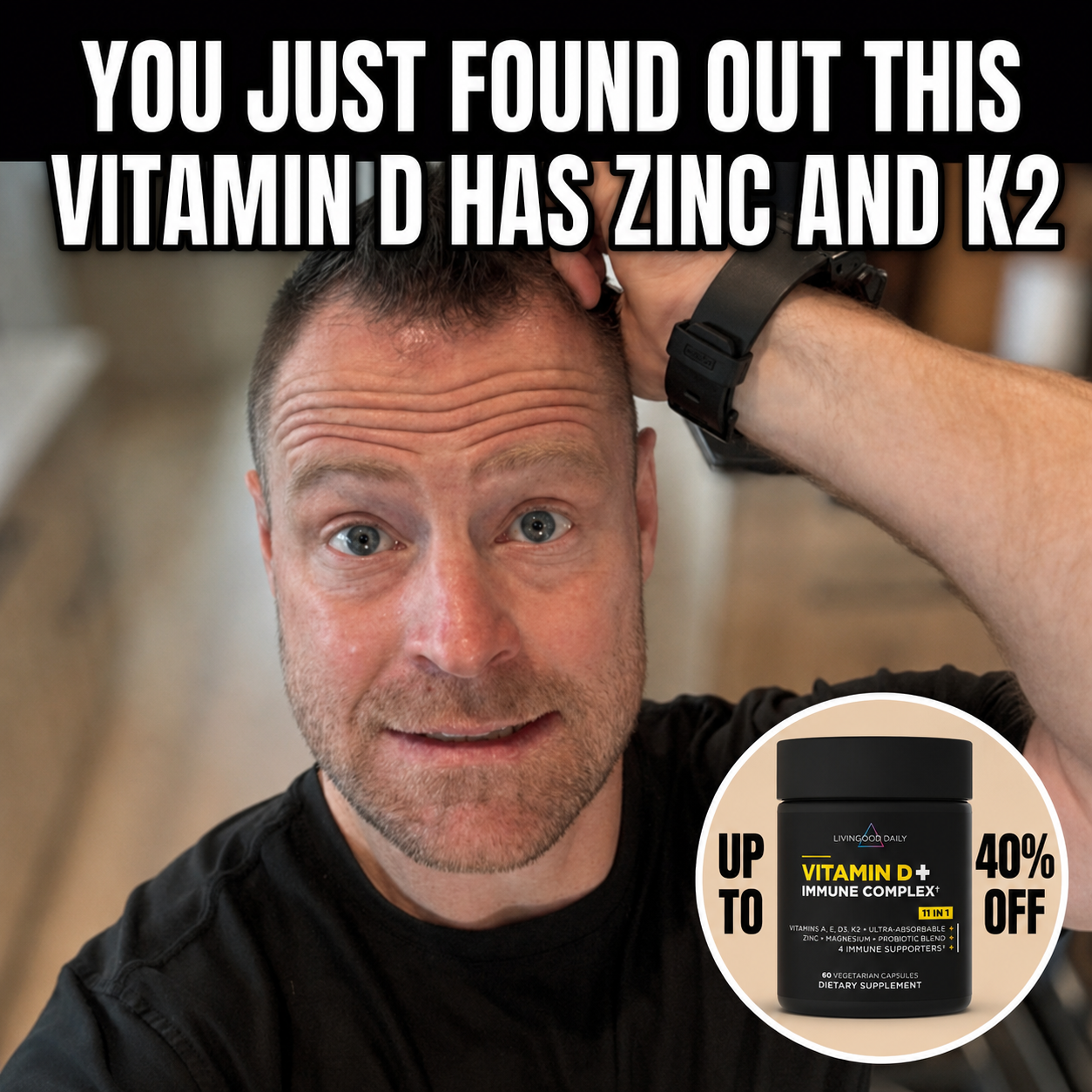
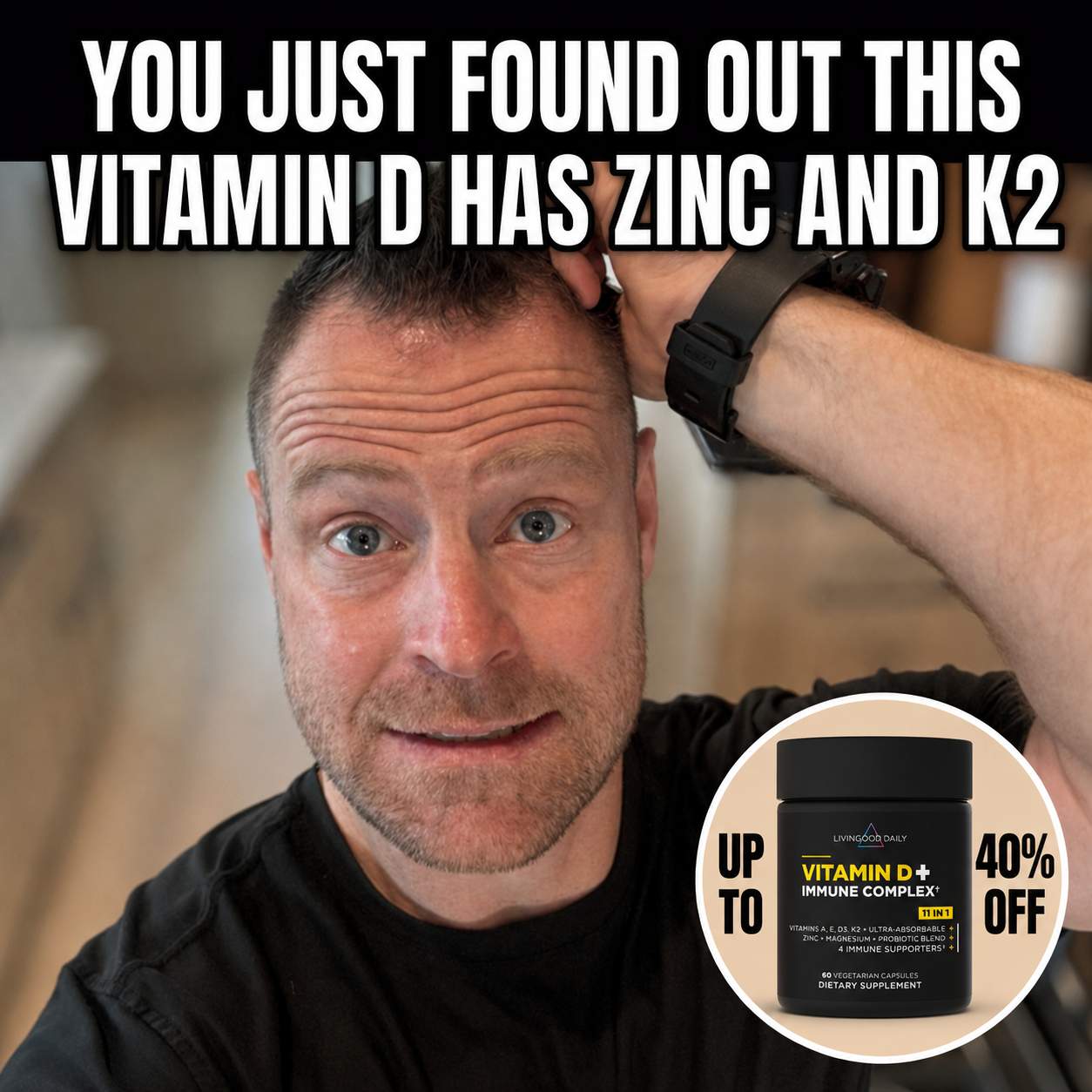
You can grab the Livingood Daily Vitamin D Immune Complex for up to 40% off today... The Livingood Daily Vitamin D Immune Complex is complete with Vitamin D3, Vitamin K, Magnesium, Zinc, Lipoic Acid, and healthy fats for better absorption. It is the ultimate supplement for immune health support all year round! Click below to grab Vitamin D for up to 40% off 👇👇 https://get.drlivingood.com/vitamin-d-special-dont-miss-fb ... more
For eleven years I built the trails other people hike. This spring I stood at a trailhead I'd cut with my own hands and watched my crew disappear up it without me. I built that trail. The one I was standing at the bottom of this past spring, watching my own volunteer crew shoulder their tools and head up without me. I cut it eight years ago — flagged the line, benched the tread, set the water bars, the whole thing — for the land trust I've given my retirement to. I'm sixty-seven, and for eleven years I ran the volunteer trail crew in our county. Built trails, maintained them, led the work parties. I was the old guy who out-hiked the young ones. The one carrying the heaviest pack up the steepest grade just to make a point. And this spring I stood at the bottom of my own trail and let the crew go up without me, because I knew, with a cold certainty, that I couldn't make the top. I am not a man who stands at trailheads. So I'm going to tell you what I did about it. Plainly, because I'm a plain man, and because I'd want somebody to tell me. Here's how it crept up, because it didn't announce itself. A trail crew's work is range. Not sprinting — lasting. Miles in, miles out, a full day of grade and load. And over the last couple of years, my range had been quietly shrinking. The long loops got shorter. The pack got lighter — I told the crew it was my knees. It wasn't my knees. I'd get partway up a grade I'd walked a hundred times and find I had to stop and let the others go ahead. Then I started staying back to "coordinate from the trailhead," which is a thing I invented to explain why the man who built the trail wasn't on it. The crew was kind about it, which was somehow worse. By this spring, I was the guy at the bottom holding the map while men and women twenty years my junior did the work I used to lead. A trail builder who couldn't make his own trail. I felt myself becoming the old man at the trailhead, and I'll be honest with you — it made me angry. Not sad. Angry. I'd built half the trails in this county and I was being retired from them by my own legs. I did the sensible thing, because anger without sense is just sulking. I went to my doctor and told him straight: my range is gone, I can't last a day on the trail anymore, what's wrong with me. He took it seriously. Ran the full workup — looked hard at the heart, the whole careful set, everything you'd want a doctor to check on a sixty-seven-year-old who's lost his stamina. And it all came back fine. Genuinely fine. His heart, his numbers — better than a lot of men my age, he said, and he meant it as good news, which it was. I asked him the only question I cared about: then why can't I get up my own trail? And he was honest with me. He said some of this comes with the years. That a man can be in good health and still find his range isn't what it was at fifty. Keep active. Keep doing what you can. Come back if anything changes. He wasn't dismissive. He just didn't have a next thing to hand me. And he was decent enough not to invent one. So I had a clean bill of health. And a trailhead I couldn't leave. There was a whole layer of how I felt that no workup was measuring. Nobody had a tool for it. Now, I'm not a man who takes "that's just age" lying down. Never have been. It's most of why I built trails into my sixties in the first place. So I did the only thing left to do. I went and read about it. Not the miracle nonsense — I spent a career as a civil engineer before I ever swung a Pulaski, and you cannot sell me a claim with no load-bearing under it. I read a footing or I walk away. The real research. And what I kept coming back to, over a lot of evenings, was a growing body of research on molecular hydrogen and cellular wellness. Quiet research. Not flashy. Not a cure for anything and everything. Just a steady, patient amount of interest in something very small. Molecular hydrogen, I learned, is the smallest molecule there is. And the most I'd responsibly take from it — an engineer, not a scientist, and I know the difference cold — was that it's looked at for supporting the body's natural antioxidant balance, supporting healthy circulation, and supporting healthy cellular energy. Healthy circulation. Healthy cellular energy. A body's range, in other words — the thing a trail crew runs on, the thing that had quietly left me. That was the layer nobody had a tool for. I want to be clear: I wasn't looking for a miracle and I didn't find one. I found something quiet and plausible with research behind it, and I decided it was worth a careful try. That's all. That's the whole of my enthusiasm. What I did next is the part I'd most want you to copy, and I'll spell it out like a work plan, because that's how my head works. Step one. Before I bought a thing, I called my pharmacist — same fellow for years, who doesn't sugarcoat anything. Told him exactly what I was looking at, and everything I already take. Asked if there was any reason it'd be a problem alongside all of it. He looked into it and said there was nothing he'd be concerned about as an addition to my routine. Step two. I brought it to my own doctor at my next visit. Said it plainly: I want to add this. Not instead of anything you've got me doing. On top of all of it. Sensible? He said it sounded reasonable — added to whatever I was already doing, not replacing any of it, a fine thing to try. Two careful people, the same answer, before I spent a dime. I'd tell you to do exactly that, in exactly that order — especially if you're already taking something for your blood pressure, your blood sugar, or your heart. You don't add a load to a structure without checking the structure first. The one I landed on is called PrimeCell H2. A rapid-dissolve tablet. You drop it in a tall glass of cool water, it dissolves and releases the hydrogen, and you drink it fresh, right away. That's not a flourish — it's the engineering of the thing. Hydrogen's the smallest molecule there is, and it escapes the second it meets heat or sits out. So you don't mix it and walk off. You drink it right then. One tablet. One glass. Once a day. I changed nothing else. Same doctor, same routine, same everything he'd told me to do. I just set the glass next to my morning coffee and got on with it. Now the honest part, because an engineer who fudges his data is no engineer. Nothing happened the first morning. Or the third. I drank my fizzy water and felt faintly ridiculous, a grown man fizzing a tablet in a glass hoping to get back up a hill. I nearly quit twice. I can't tell you which week it turned. I genuinely can't, and that bothers me, because I log everything — I had a trail journal for thirty years. But there came a Saturday work party, early summer, when I shouldered a full pack out of old habit before I remembered I was supposed to "coordinate from the trailhead." And I just… started up. And kept up. I made the top of my own trail for the first time in two years — eight-tenths of a mile and four hundred feet of climb — and I set down my pack at the overlook I'd built the bench for, and I sat on that bench, and I did not need it the way I'd have needed it the last time. One of the young crew leaders looked at me sitting there and said, "Didn't think we'd see you up here again, Walt." Neither did I, son. Neither did I. It wasn't dramatic after that. It was just my range, coming back to me a grade at a time. I led the work parties again. Carried the heavy pack again — to make the point again. The long loops got long again. I stopped inventing reasons to stay at the trailhead, because I wasn't at the trailhead. I can't prove to you any of it was the tablet. I won't pretend I can, and you should be suspicious of any man who would. I was hiking more, the moment I had the range to — and hiking builds the very thing I'd lost, so the two fed each other. A dozen things were in motion. Maybe it was all of them. Maybe it was the one thing I added. But I'd been doing every sensible thing for two years while my range only shrank. And somewhere after the glass of water, quietly, the hill got climbable again. That's the honest version. It's the only one I'll give you. I don't deal in any other. At my next visit my doctor went through everything and said I was in fine shape — same good news as before — and to keep doing what I'm doing. The report didn't change. The man carrying it got back up his trail. So here's what the product is for, plainly. PrimeCell supports healthy circulation. It supports healthy cellular energy. It supports the body's natural antioxidant balance. That's not a promise about your range, or your trail, or your heart, or anything at all. It's not a promise about anything. It's just what it's for. Some people notice something in the first week or two. Others take much longer. Some, I'd imagine, not much at all. Bodies are different. Mine is just one, with one story. It's a slow thing, taken steadily — the cellular processes it supports build up gradually, not overnight. It isn't a pill you reach for at the bottom of a hill. It's a glass of water you drink every morning whether you feel anything that day or not. So here's what I'd tell you, standing at the trailhead with our packs on. If your range has quietly gone — if the loops got shorter, the load got lighter, and you've started inventing reasons to wait at the bottom while other people do the thing you used to lead — and your doctor's looked you over hard and pronounced you healthy, and there's no next thing to hand you: First, talk to your doctor or your pharmacist. Both, if you can. Especially if you're already taking something for your blood pressure, your blood sugar, or your heart. Ask the plain question: is this sensible to add to what I'm already doing? If they say yes — and there's a fair chance they will — it's a tablet and a glass of cool water in the morning. On top of everything else, not in place of any of it. Then give it a few weeks. Don't check it daily like a half-set water bar. Just set the glass next to the coffee and let your body keep its own time. Be patient with yourself. And don't be too quick to accept the trailhead. I accepted it for a year longer than I had to. Some of us were not built to hold the map. That's the whole of it. That's what a stubborn streak and a stack of honest research, between them, did for me. And I'd be a poor sort of trail builder not to mark the route for the next person. P.S. I'm back to being the old guy who out-hikes the young ones, which they pretend to resent and secretly, I think, find reassuring. A couple of them have asked what changed. I tell them the truth — the doctor, the reading, the tablet, all of it, in order — and I tell them to ask their own doctors, not me, because I build trails, I don't practice medicine. P.P.S. I keep a spare box in the cupboard now. PrimeCell's a small company and they've sold out before, and a man who never once started a work party short a tool isn't about to run short on what his mornings depend on. It's there next to the coffee, every day. P.P.P.S. The steps, in order: Call your doctor or pharmacist first, ask if it's sensible to add to what you're on. If yes, drop one tablet in a tall glass of cool water each morning and drink it fresh, right away. Change nothing else — just add it. Then give it a few weeks. Some notice something in the first week or two, others longer, some not much at all. Be patient. P.P.P.P.S. PrimeCell H2 has a 90-day money-back guarantee — not satisfied for any reason at all, every penny back, no questions. For a supplement, that's the only sensible policy. Enough time to actually tell, instead of deciding in a week. I'd take the full ninety days. P.P.P.P.P.S. Last month the land trust put a small sign at the overlook on my trail — they do that for the volunteers, eventually. It's got my name on it, and the year I built it, and I'll admit I stood there a while when they hung it. But here's the part that matters to me: I read that sign standing up, at the top, with a full pack on my back and a work party waiting on me to lead them down. Not from a photograph somebody brought back to me at the trailhead. That's not a headline. It's a small, quiet thing. But the small quiet things — reading your own name at the top of your own trail, with the climb still in your legs — are the ones worth telling someone at a trailhead about. 👉 https://track.getamalahealth.com/5548c06d-d9c3-4785-b466-fec64a6fdb28 The people and events depicted in this ad are illustrative and not based on any specific individual. Individual experiences vary. These statements have not been evaluated by the FDA. This product is not intended to diagnose, treat, cure, or prevent any disease. ... more
The wait is over! 🚴♂️ Get your Jasion X-Hunter E-Bike at an unbelievable $859 Black Friday price. Plus, enjoy an extra $50 off with code FBWS50 and receive a FREE rear basket gift. ✅1400W Peak Motor ✅70 Miles Max Range ✅30+ MPH Max Speed ✅85 N·m Torque ✅20X4'' Fat Tire ✅400 lbs Max Load ✅Foldable Design ... more
My sister started Ozempic the same week I put on a $65 bracelet. Nobody in our family said the word "race" out loud. I'm 55. Everybody watched both of us at every single Sunday dinner anyway. Let me say this first, because I love my sister. This is not a story against her shot. Janet has insurance that covers it and a doctor who recommended it, and it's her body. This is a story about the rest of us. The women whose insurance said no, whose budget laughed at $900 a month, who got told there was 1 modern answer to the meno belly and we couldn't afford it. I'm 1 of those women. I work payroll for a school district in Indiana. I know exactly what $900 a month is. It's my car payment plus the electric bill. I process the paychecks of 340 people who know it too. The Meno Belly That Outlasted Every Plan I Could Afford : Mine showed up at 51 and settled in like it had signed a lease. 3 years of it. Same size 10 legs I've always had, and a middle that needed a 16. I did the affordable things, all of them. Calorie apps. Walking groups. The church gym with the donated equipment. My arms and face thinned. The belly stayed, round and hard and first thing anyone saw, the thing dresses are built to hide and never quite do. When my doctor brought up the injections, I asked what it cost without coverage. She winced before she said the number. That wince was my actual diagnosis. The treatment existed. It just wasn't for women like me. The $3,300 I Spent On The Affordable Answers : - 2 years of a points-based diet program: $530 - A juicer, a treadmill from Facebook Marketplace, and a dead air fryer: $720 - Supplements with the word "burn" on them: $610 - A hormone wellness clinic that took my $1,440 and gave me a binder What The Quiet Week At Dinner Taught Me : Janet started her shots in January, and our Sunday dinners turned into a science fair. Everyone had opinions. Mom worried out loud about the side effects she'd seen on the news. My brother-in-law made the same joke every week. Janet lost fast at first, and I was genuinely glad for her, and also, I will admit it here because it's anonymous, I went home those nights and stood sideways in front of my mirror and did the math on what I'd never afford. The bracelet came to me from the church walking group, of all places. Rhonda, 63, retired pharmacy tech, the one who'd lost her belly the year before and credited, of all things, her wrist. I'd assumed it was one of her stories. Rhonda has stories. She explained it to me in the parking lot in February, cold enough to see our breath, with the certainty of a woman who spent 31 years reading prescription labels. After menopause, your stress hormone, cortisol, runs high and stays high. High cortisol gives your body a standing order: store fat deep in the belly, hold water over it, protect it. That's why the cheap plans fail and even some expensive ones disappoint. They argue with calories while the order stays posted. Cut more calories, the body reads famine, the order gets louder. The bracelet presses calm into the nervous system through points at the wrist. Calm system, lower cortisol. Lower cortisol, the order lifts, and the belly finally releases. She'd watched it work on herself and 2 of her sisters. "It's not the shot," she said. "It's not trying to be the shot. It's the off switch for the thing the shot never touches." $65. Once. Less than Janet's copay. I didn't tell anyone at dinner. I just put it on. My 14-Week Transformation : Week 1-3: Slept better. Snapped less at payroll deadlines. The scale barely moved and I almost quit, and Rhonda told me the sleep was the engine starting. She was right. Week 4-7: 9 pounds down. Waistband loose by Friday. Mom squinted at me over the mashed potatoes and said nothing, which in my family is a headline. Week 8-11: 16 pounds down, 5 inches off my waist. At Easter, my brother-in-law asked if I'd "started the shots too." Janet looked at me. I said no. The table went interested. Week 12-14: 23 pounds gone, 7 inches off my waist. I wore a tucked-in blouse to my niece's graduation party and held my plate at my side, not in front of my stomach, for the first time in 3 years. There's a photo. I'm in it. I'm not hiding. The Side-By-Side Nobody Printed But Everybody Knows : I'm not going to pretend I have Janet's chart. She lost more pounds than me, faster, and she earned them. She also spent her spring nauseated, told me food stopped being food, and her plan costs $900 every single month, forever, because her doctor was honest that stopping usually means regaining. Mine looked like this: Waist: 42 to 35 inches Weight: 172 to 149 Cost: $65, once Side effects: I sleep 7 hours and my husband says I hum in the kitchen again 2 roads. Hers is real. So is mine. Only 1 of them fits a payroll clerk's budget, and I needed the one that did. 10 Weeks Later : Janet asked me about the bracelet in May, quietly, on the porch while the others did dishes. Not to switch, just curious why my face looked calmer than hers. I told her everything I just told you, including the parts about watching her in January. We laughed about the science fair. Mom ordered one the next week. So did my niece, 34, for completely different reasons, and Rhonda just keeps nodding at church like a prophet. The Sunday Dinner Truth : If you've been priced out of the modern answer and quietly hating your belly about it, hear me. You are not behind. You are not cheap. A belly that menopause built out of stress hormones answers to calm, and calm does not cost $900 a month. It cost me $65 and 14 weeks of wearing a bracelet I forget I have on. 👉 If the shot isn't in your budget and the belly isn't going anywhere, look at the Kalm bracelet. Just $64.90 at the official store. That's 7% of 1 month of the alternative. Measure your waist and give it 8 honest weeks. https://mykalm.co/original-bracelet ... more
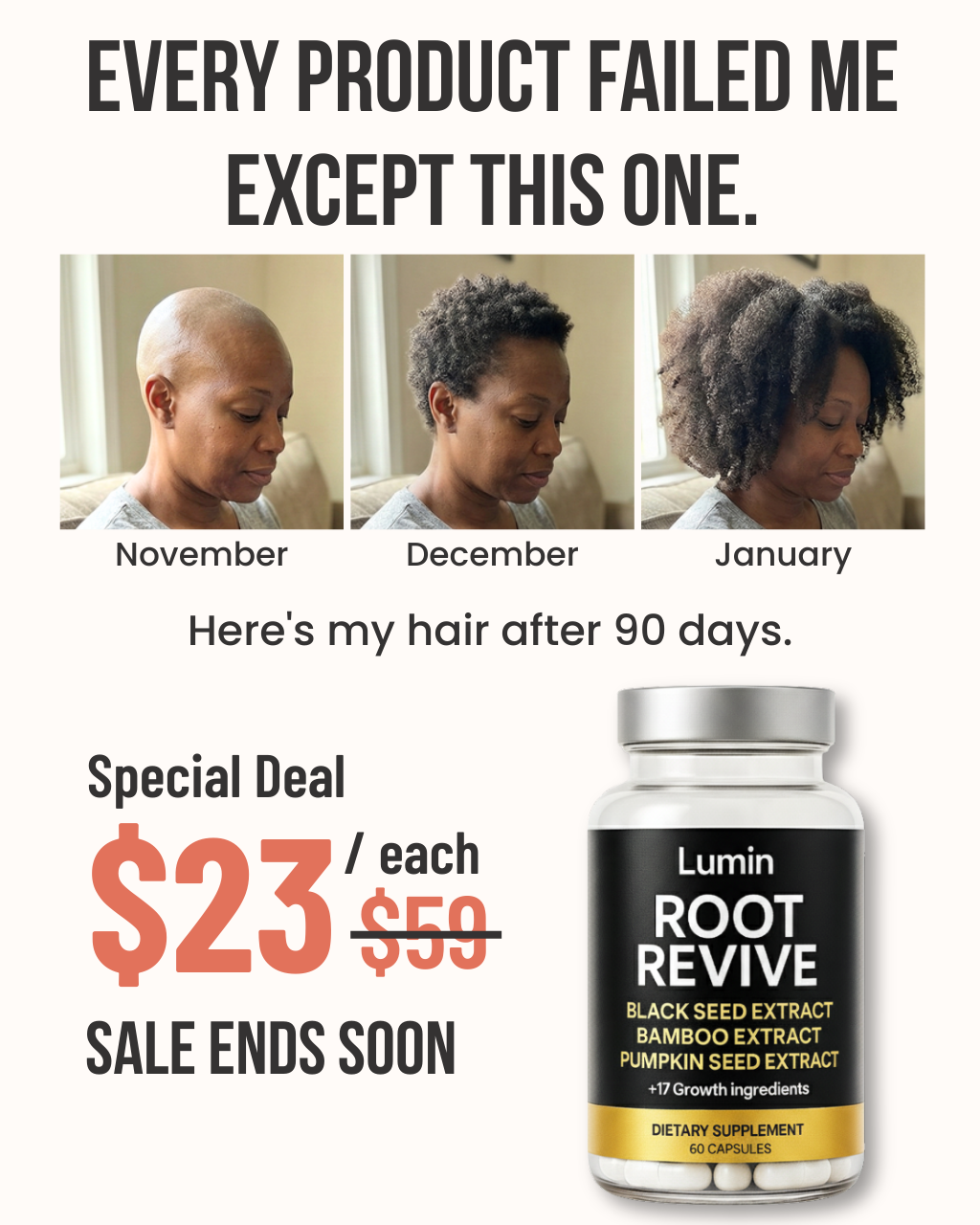
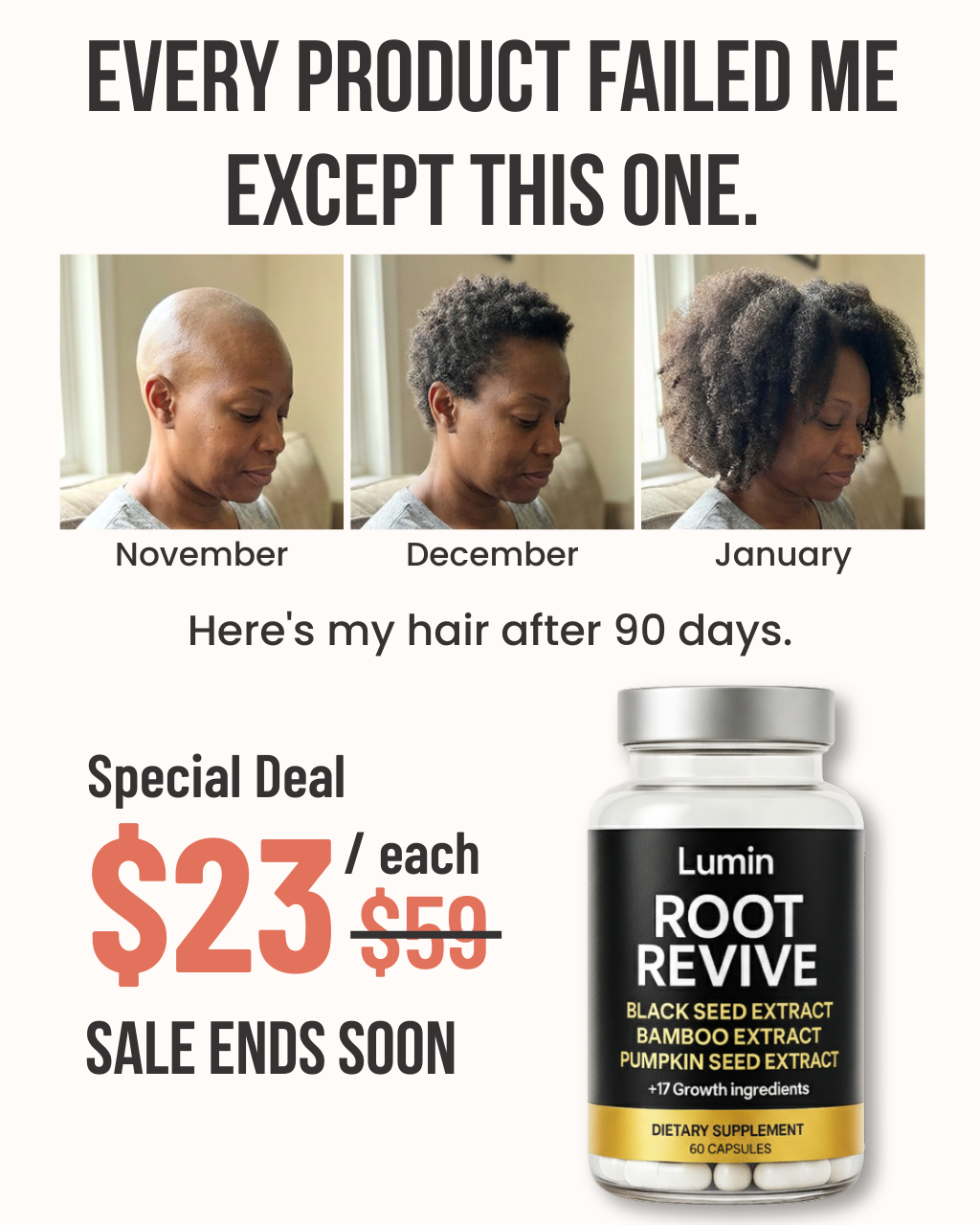
Hair grows from the follicles on our head, but when these follicles get inflamed by years of tight braids, chemical relaxers or stress, they can go into ‘sleep mode’. When this happens, our scalp loses hair and we get thinning edges or bald spots. 😖😭 👉 Learn how Root Revive can naturally revive your follicles and regrow your hair. https://trylumin.co/pages/quiz ... more
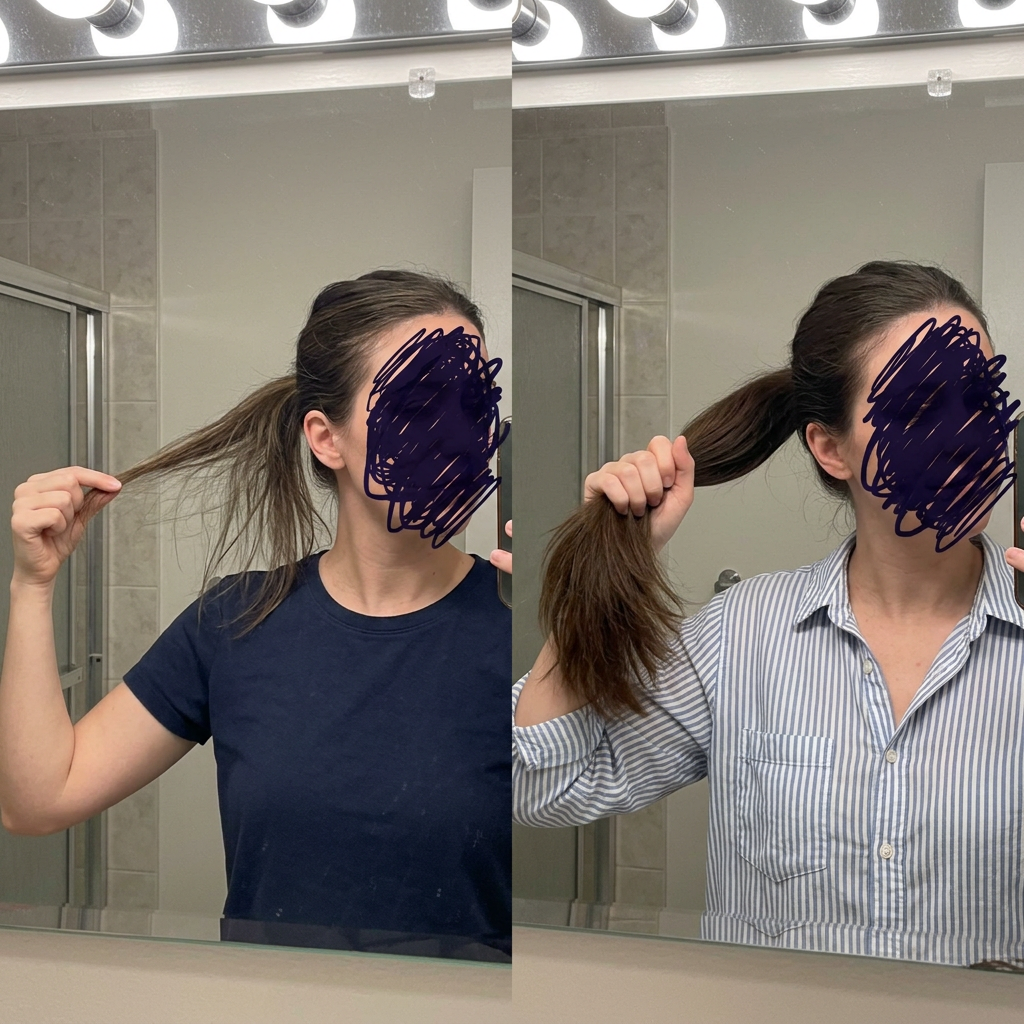
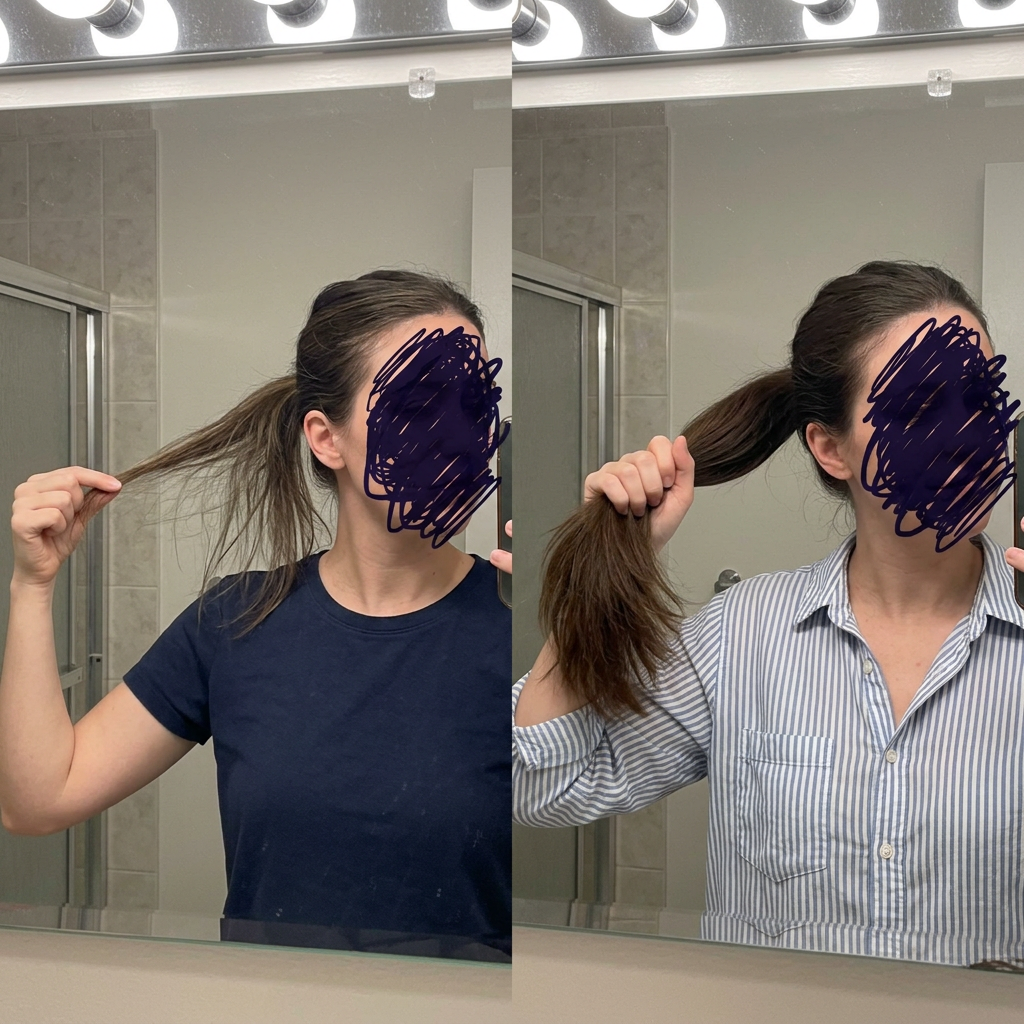
Please STOP buying hair growth supplements until you check your shampoo. I know that sounds ridiculous. But I spent over $900 and nearly two years swallowing biotin pills, choking down collagen powder, and massaging serums into my scalp every night before bed. None of it grew back a single strand. And the reason none of it worked was something so obvious, so simple, so infuriating that when I finally figured it out, I sat on the edge of my bathtub and cried. The thing that was killing my hair was sitting on the shelf in my shower the entire time. I used to have thick hair. The kind of hair where my stylist would say "God, you have SO much hair" every time I sat in her chair. The kind that took 45 minutes to blow dry. The kind I actually complained about because it was "too heavy" and "too much." I would give anything to have that problem again. I don't know exactly when the thinning started. That's the cruel part — it happens so gradually you don't notice until it's already bad. For me, the first sign was my ponytail. I'd always wrapped the hair tie around twice. Then one morning I wrapped it three times. Then four. And it still felt loose. I told myself I was imagining it. Then I started finding hair everywhere. On my pillow. On the back of my office chair. In the shower drain. On the bathroom floor. Wrapped around the bristles of every brush I owned. I'd run my fingers through my hair and three, four, five strands would come with them. Every single time. But the moment I knew — the moment I couldn't pretend anymore — was at my daughter's birthday party. My sister took a photo of me from behind while I was leaning over the cake. When I saw it that night, I zoomed in and felt my stomach drop. I could see my scalp. Through my hair. In a photo taken from three feet away. My part looked like a highway. The crown of my head — where my hair used to be thickest — was thin enough to see pink skin underneath. I stared at that photo for twenty minutes. Then I deleted it. The next morning I started Googling. "Why is my hair thinning" "Best supplements for hair loss women" "How to regrow thinning hair" Every article said the same things: Take biotin. Try collagen peptides. Make sure you're getting enough protein. Consider Nutrafol. Use Nioxin shampoo. So I did. All of it. I bought biotin — the 10,000 mcg ones. Took them every single day for three months. Nothing. I ordered collagen peptides from Amazon. The expensive kind — $47 a tub. Mixed it into my coffee every morning even though the texture made me gag. Four months. Nothing. I bought Nutrafol. $89 for a one-month supply. They said to give it at least three months. I gave it four. $356 total. Nothing. I bought the entire Nioxin system — shampoo, conditioner, scalp treatment. Used it exactly as directed. Twice a week for the "deep treatment." Every day for the "daily care." Another $80 every couple months. Nothing. I bought rosemary oil and mixed it with castor oil and rubbed it into my scalp three times a week. My bathroom smelled like an Italian restaurant. My pillow was permanently stained. My hair was still falling out. I tracked my spending one night because I couldn't sleep. In 14 months, I had spent $937 on hair growth products. $937. And my hair was thinner than when I started. I went to my doctor. Told her everything. She ordered blood work. Thyroid — normal. Iron — normal. B12 — normal. Vitamin D — normal. "Everything looks great," she said. "It's probably just stress. Or hormones. Or genetics. It happens to a lot of women." She said it so casually. Like she was telling me about the weather. I wanted to scream. "It happens to a lot of women" wasn't an answer. It was a dismissal. It was her way of saying "I don't know, and I'm not going to try to find out." I left that office feeling more alone than I had in years. The thinning got worse. I stopped wearing my hair up because it showed how thin the sides had gotten. I stopped standing under overhead lights because they turned my scalp into a spotlight. I parted my hair in three different places trying to find the angle that hid the most scalp. None of them worked. I started wearing hats. Not because I liked hats. Because I was terrified someone would see. One night my husband found me crying in the bathroom. I was holding a clump of hair I'd just pulled from the shower drain. He tried to hug me and I snapped at him. "You don't understand. You can't understand. I'm losing myself." That wasn't dramatic. That's exactly how it felt. My hair had been part of my identity my entire life. And it was disappearing, and nothing I did could stop it. I felt defective. Like my body was broken in some way that doctors couldn't find and supplements couldn't fix. Three weeks later, I went to get my hair cut. I almost cancelled the appointment. I'd been avoiding the salon for months because sitting in that chair, under those lights, with someone else looking closely at my hair — it felt like being exposed. But I went. And that appointment changed my life. My stylist — Maria — she'd been doing my hair for six years. She knew what my hair used to look like. So when she ran her hands through it and I saw her face change, I knew she could see it too. She didn't say anything at first. Just kept sectioning, clipping, working quietly. Then, while she was washing my hair, she asked me a question nobody had ever asked before. "What shampoo are you using at home?" I told her. A popular drugstore brand. One I'd been using for years. She was quiet for a second. Then she said: "Can I be honest with you?" "Please." "I think your shampoo might be part of the problem." I almost laughed. My shampoo? I'd spent $937 on supplements, serums, and treatments. I'd had blood work done. I'd changed my diet. And she was asking about my shampoo? But Maria wasn't joking. "I've been doing hair for 18 years," she said. "And in the last few years, I've had more clients come in with thinning hair than in my entire career combined." "Every single one of them was using a shampoo with sulfates." "And every single one of them was trying to fix their hair with supplements and oils and treatments — while continuing to wash their hair with the thing that was causing the problem." She let that sit for a second. "You know what sulfates do, right?" I didn't. Not really. "They strip everything. That's their entire job. They're industrial-strength degreasers. The same chemical compound is in dish soap. Floor cleaner. Engine degreaser. And it's in about 90% of the shampoos on the shelf at Target." "Every time you wash your hair with a sulfate shampoo, it strips your scalp of its natural oils. That's why your hair feels 'squeaky clean' after. But it's also stripping something else. Something your follicles desperately need to survive." "Sulfur." I'd never heard anyone talk about sulfur and hair before. "Sulfur is the building block of keratin," Maria said. "Keratin is literally what your hair is made of. Your scalp produces sulfur naturally, and your follicles need it to grow strong, thick hair." "But when you wash with sulfates every day — sometimes twice a day — you strip that sulfur away faster than your body can replace it." "Over months. Over years. Your follicles slowly starve. They weaken. They stop producing healthy hair. Eventually some of them go dormant entirely." "And no amount of biotin or collagen or Nutrafol is going to fix that. Because you're not deficient in biotin. You're deficient in sulfur. At the scalp. And you're washing it away every single morning." I sat in that salon chair feeling like the floor had dropped out from under me. Two years. $937. Countless supplements. Doctor visits. Tears. Anxiety. Hats. And the thing destroying my hair was the $6 bottle of shampoo I used every single day. I drove home in a daze. I walked straight to my shower and picked up my shampoo bottle. Turned it around. Read the ingredients. Sodium Laureth Sulfate. Second ingredient. Right after water. I picked up the conditioner. Dimethicone. Silicones. More chemicals I couldn't pronounce. Then I looked at the Nioxin bottles I'd been using as part of my "hair recovery routine." The $80 system I'd been trusting for nine months. Turned them around. Sodium Lauryl Sulfate. I felt my face get hot. The "hair growth" shampoo system I'd been using — the one marketed specifically for thinning hair — contained the exact same sulfates as the $6 drugstore bottle. I had been stripping my scalp of sulfur every single day while simultaneously taking supplements to try to regrow the hair that the sulfates were killing. It was like trying to fill a bathtub with the drain wide open. No wonder nothing worked. I was undoing every dollar I spent the moment I stepped in the shower. I felt sick. Then I felt furious. That night I couldn't sleep. At 1:22 AM I got out of bed, went to the kitchen table, opened my laptop, and started searching. Not "best shampoo for thinning hair." Not "hair growth products." I'd done those searches a hundred times. This time I typed: "sulfur deficiency scalp hair loss" And what I found made me want to throw my laptop across the room. Not because it was bad news. Because the information had been right there. The entire time. Study after study. Published research — in the Journal of Dermatology — confirming exactly what Maria had told me. Sulfur is essential for hair growth. It's a key component of keratin — the protein your hair is literally made of. It forms the disulfide bonds that give hair its strength, elasticity, and thickness. Your scalp needs sulfur to maintain healthy follicles. Without adequate sulfur, follicles weaken, shrink, and eventually go dormant. And sulfate-based shampoos — the ones used by roughly 90% of women — strip sulfur from the scalp with every single wash. I kept reading. The research explained why supplements fail for so many women: Biotin supports keratin production — but keratin can't be produced without adequate sulfur at the follicle level. Collagen provides amino acid building blocks — but amino acids can't strengthen hair if the follicle itself is starved and shutting down. It's like delivering lumber to a construction site that has no foundation. The materials just sit there. Useless. Because the ground-level problem was never addressed. And the ground-level problem, for millions of women, is sulfur depletion at the scalp. Caused by the very product they trust to "clean" their hair every day. I read for three hours straight. By the time I looked up from my screen, it was after 4 AM. I had one question: if sulfur is what my follicles need, how do I get it directly to my scalp? That's when I found onion hydrosol. I know. Onion. For your hair. It sounds insane. I literally laughed out loud at my kitchen table at 4 AM. But the science stopped me cold. Onion — specifically the hydrosol, which is a concentrated water extract from onion bulbs — is one of the richest natural sources of bioavailable sulfur on earth. And unlike supplements that have to pass through your digestive system and hope that some fraction of the nutrients eventually make their way to your scalp through your bloodstream, onion hydrosol delivers sulfur directly where it's needed. Topically. Right to the follicle. The Journal of Dermatology published a study showing that onion juice applied to the scalp produced visible hair regrowth in the majority of participants. Not "might help." Not "showed promising trends." Visible regrowth. And it wasn't just sulfur delivery. The research showed that onion hydrosol does three things simultaneously: First — it delivers concentrated sulfur directly to starving follicles. The raw material they need to produce keratin and grow strong hair again. Second — it stimulates blood circulation in the scalp. More blood flow means more oxygen and nutrients reaching the follicles. Think of it like unclogging a pipe that's been blocked for years. Once circulation is restored, everything downstream works better. Third — it helps reactivate dormant follicles. Not dead follicles — dormant ones. The ones that shut down because they weren't getting what they needed. Give them sulfur and proper circulation, and many of them wake back up and start producing hair again. I sat there staring at my screen thinking: this is it. This is what every single product I tried was missing. Not another pill to swallow. Not another serum to layer on top of the damage. The actual nutrient my scalp was starving for, delivered directly to the place it needs to be. But then I thought: if this is real, why isn't everyone doing it? And then it hit me — some people are. In India, Turkey, the Middle East, women have used onion on their scalps for centuries. It's one of the oldest hair growth remedies in the world. The modern research was just confirming what traditional medicine had known for generations. The reason it's not mainstream in the West? Because there's no money in telling women to stop buying expensive supplements and fix their shampoo instead. The hair loss industry is worth billions. They need you buying pills, serums, treatments, subscription boxes, and 8-step "systems." They don't make money if the answer is "the problem is your shampoo, and a simple ingredient swap could change everything." I spent the next three days researching onion hydrosol shampoos. And I learned something that made me even more frustrated. Most shampoos that claim to contain "onion extract" or "onion oil" use almost none of it. A fraction of a percent. A trace amount. Just enough to put it on the label and charge a premium. It's like putting a single drop of orange juice in a glass of water and calling it "fresh-squeezed." Technically not a lie. Functionally useless. I needed a product with a real concentration. Enough onion hydrosol to actually deliver meaningful sulfur to my scalp with each wash. That's when I found one with 15% pure onion hydrosol. Fifteen percent. Not a splash. Not a marketing claim. Fifteen percent of the actual formula. And it wasn't just the onion hydrosol. The formula included other ingredients I recognized from my months of late-night research: Rosemary oil — clinically studied and shown to promote hair growth by boosting scalp circulation. One study even showed it performed comparably to minoxidil over six months — without the side effects or the dependency. Nettle extract — a natural DHT blocker. DHT is a hormone that can shrink and weaken hair follicles. I hadn't even considered hormones as part of my problem, but this shampoo was covering that angle too. Attacking the problem from multiple directions. Peppermint oil — which stimulates the scalp and promotes blood flow to follicles. Biotin — but not in a pill. Delivered topically, directly to the follicle, where it can actually do its job supporting keratin production instead of being diluted through the entire digestive system. Aloe vera — to hydrate and soothe the scalp. Because a calm, healthy scalp is the environment where follicles thrive. Hydrolyzed vegetable protein — to strengthen the hair structure itself. And zero sulfates. Zero parabens. Zero silicones. Zero harsh chemicals. The very ingredient that had been destroying my hair for years — sulfates — was completely absent from this formula. Instead of stripping sulfur away, this shampoo was flooding my scalp with it. It was the exact opposite of everything sitting in my shower. There was a matching conditioner too — with onion extract, castor oil for visible thickness, argan oil for shine, and biotin to prevent breakage. I sat on the product page for a long time. Read the ingredient list twice. Read every review I could find. Then I thought about the $937 already wasted. Then I thought about Maria's voice: "You're not deficient in biotin. You're deficient in sulfur. And you're washing it away every day." I ordered the shampoo and conditioner that night. When the package arrived, I'll be honest — I was nervous. Not even about whether it would work. I was nervous about the smell. Onion shampoo? I pictured walking into work smelling like a deli counter. I pictured my husband leaning away from me on the couch. But when I cracked open the bottle and held it to my nose, I actually laughed out loud. It smelled like herbs. Fresh, clean, slightly minty. Not even a whisper of onion. Nothing. I smelled it three more times just to be sure. I got in the shower that night and used it for the first time. The texture was different from what I was used to. It didn't foam up into that thick, sudsy lather I expected. Because that lather? That's the sulfates. That "squeaky clean" feeling is actually the feeling of your scalp being stripped bare. This shampoo had a gentle, light lather. It felt like it was nourishing instead of scrubbing. I worked it into my scalp with my fingertips for about a minute, then rinsed. My scalp didn't feel tight or dry afterward. It felt calm. Soft. Almost like it had finally gotten a drink of water after being lost in the desert for two years. I followed with the conditioner. Worked it through the ends. Rinsed. Got out. My hair didn't look dramatically different. I wasn't expecting it to. But it felt different. Softer. Less brittle. Like something had shifted. "OK," I thought. "Let's see what happens." Here's what happened. Week 1. Less hair in my brush. Not a dramatic difference — but I noticed. Where I used to pull out what looked like a small animal after every brushing session, it was noticeably less. Maybe 30% less. The shower drain, which I used to clear daily, didn't clog once. I told myself not to get excited. I had been disappointed too many times. Week 2. The shedding continued to slow. My pillow, which always had strands on it every morning, was clean for the first time in months. And my scalp felt different. Not itchy. Not tight. Not flaky. Just... healthy. It sounds strange, but it felt like my scalp was breathing again. Like it had been suffocating under all those sulfates and it was finally getting air. I ran my fingers through my hair and only two strands came with them. Two. I used to lose ten or fifteen every time I touched my head. Week 3. I was brushing my hair one morning and I stopped mid-stroke. Something was different. The brush was meeting more resistance — not from tangles, but from volume. Like there was simply more hair on my head than there had been three weeks ago. I leaned close to the mirror. Looked at my part. Was it... narrower? Or was I seeing what I wanted to see? I pulled up the photo from my daughter's birthday party on my phone. The one I'd deleted from the camera roll but was still saved in my "recently deleted" folder because I hadn't had the heart to permanently erase it. I held it next to my reflection. I wasn't imagining it. The part was narrower. Not dramatically. But visibly, undeniably narrower. My hands started shaking. Week 4. I saw them. Baby hairs. Tiny little strands, maybe a quarter inch long, sticking up along my hairline. New growth. Hair that hadn't been there a month ago. I got so close to the mirror that my breath fogged the glass. Tilted my head under the bathroom light and examined my part inch by inch. They were everywhere. Dozens of tiny new hairs growing along the edges of my part. Along my hairline. At my temples. Filling in the spaces that had been empty for months. I called Maria. I could barely get the words out. "I can see them," I said. "There's new hair growing." She didn't sound surprised. She sounded satisfied. "I told you. Once you stop stripping and start feeding, your follicles come back. They were never dead, hon. They were just starving." Week 6. My husband was standing behind me while I was brushing my hair one evening, waiting for the bathroom. He tilted his head and said something that nearly made me drop the brush. "Hey — is it just me, or does your hair look thicker?" I spun around. "You can see it?" "I mean... yeah. It looks different. Fuller or something." This man does not notice when I get my hair cut. He once didn't notice I'd rearranged the entire living room until I pointed it out. If he could see a difference in my hair, it was real. Week 8. I wore my hair in a ponytail for the first time in over a year. Not because I had to. Because I wanted to. Because it looked good. Because when I wrapped the hair tie around, I could only wrap it twice again. Twice. I stood in the bathroom staring at that ponytail in the mirror, tears streaming down my face, thinking about every month I'd spent hiding. Every hat I wore in the summer heat. Every photo I deleted. Every time I angled myself away from overhead lights. Every morning I spent rearranging my part to cover the thinning. And all I had needed to do was stop poisoning my hair and start feeding it. All I needed to do was swap my shampoo. It's been four months now. I use the onion hydrosol shampoo and conditioner every day. That's the only thing I changed. I stopped taking biotin. Stopped choking down collagen powder. Stopped Nutrafol. Stopped the rosemary oil scalp massages. Stopped all of it. Just the shampoo and conditioner. That's it. My hair is not back to where it was at its absolute thickest. I don't know if it ever will be. But it is incomparably, undeniably better than it was four months ago. The thin spots are filling in. My part looks like a part again — a line, not a highway. I can wear my hair up, down, curly, straight, in a ponytail, in a bun, in a clip — whatever I want, however I want, without thinking about it. Without strategizing. Without hiding. I went back to Maria last week for a trim. She sectioned my hair and stopped mid-clip. "Look at all this new growth," she said, turning me toward the mirror. "See all these baby hairs? Your density is coming back. I can feel it." Then she said something that hit me harder than I expected. "You know how many women sit in this chair every week and I can see their scalp thinning? And they're spending hundreds on supplements that won't work because they're still using sulfate shampoo every single day? And I tell them. I tell every single one of them. And half of them don't believe me. Because it sounds too simple." She looked at me in the mirror. "You believed me. And look at your hair now." If you're reading this and you see yourself in my story — if your hair is thinning and you've tried biotin, collagen, Nutrafol, Nioxin, castor oil, rosemary oil, or any other supplement or treatment that promised to help and didn't — I need you to hear something. The problem might not be what you're putting IN your body. The problem might be what you're putting ON your scalp. Every single day. Go to your shower right now. Pick up your shampoo bottle. Turn it around. Read the second or third ingredient. If it says Sodium Lauryl Sulfate or Sodium Laureth Sulfate, you're stripping your scalp of sulfur every time you wash your hair. And if your follicles are starving for sulfur, no supplement on earth is going to overcome what you're doing to them daily. It's like watering a garden while someone stands behind you salting the soil every night. You can water all you want. The plants are still going to die. You have to stop the damage first. Then you can feed the growth. That's exactly what switching to onion hydrosol shampoo did for me. It stopped the stripping. It started delivering the sulfur my follicles had been starved of for years. And within weeks, those follicles responded. Not because of magic. Because of science. Published, peer-reviewed science. Your follicles probably aren't dead. They're dormant. They're starving. They're waiting for the one thing they need most. You've just been washing it away every morning. The shampoo I use has 15% pure onion hydrosol — not a token trace amount like most brands that slap "onion" on the label, but an actual effective concentration. It also contains rosemary oil for circulation, nettle extract to block DHT, peppermint oil to stimulate the scalp, biotin delivered directly to the follicle, and aloe vera to soothe and hydrate. Zero sulfates. Zero parabens. Zero harsh chemicals. It smells like herbs, not onions. I promise. It's made by a small family business — not a corporation. And it comes with a 30-day money-back guarantee. If you don't love how your hair looks and feels, you get a full refund. No questions asked. I mention that because I know what it's like to spend money on something that doesn't work. I've got $937 worth of proof sitting under my bathroom sink. This guarantee means you're not stuck if it's not for you — unlike every other product I wasted money on over two years. Don't waste another month on supplements that can't fix a scalp problem. Don't spend another dollar on "hair growth" shampoos that still contain the sulfates destroying your hair. Don't sit in your bathroom staring at your widening part, convinced your body is broken. Your body probably isn't broken. Your follicles probably aren't dead. They're starving. For something you've been washing away every single day. Stop stripping. Start feeding. Your hair is waiting to come back. You just have to stop standing in its way. P.S. — My biggest regret is the two years I wasted on supplements while the real problem was in my shower the whole time. Every single wash with sulfate shampoo was another day of stripping the sulfur my follicles needed. If someone had told me this 24 months ago, I would have saved $937 and more tears than I can count. Don't be me. Check your shampoo bottle tonight. P.P.S. — If you try it, give it at least 3–4 weeks. Week 1 you'll notice less shedding. Week 2 your scalp starts feeling different — calmer, healthier, like it can finally breathe. Week 4 is when the baby hairs started for me. And the smell? It's genuinely lovely. Herbal and fresh. My husband actually complimented it. Zero onion. I swear on my new baby hairs. 😊 ... more